
What Is UTC? Universal Coordinated Time Explained
 Alican Ataseven
•
2025-12-01
•
12 min min read
Alican Ataseven
•
2025-12-01
•
12 min min read
What is UTC? Understanding the World's Time Standard
UTC, which stands for Coordinated Universal Time, is the primary time standard by which the entire world regulates clocks and time. It serves as the foundation for civil time today and is extensively used in Internet protocols, aviation, weather forecasting, scientific research, and international business communications. For a comparison with historical standards, see our GMT vs UTC guide or learn about time zone differences.
How UTC Works: The Technical Foundation
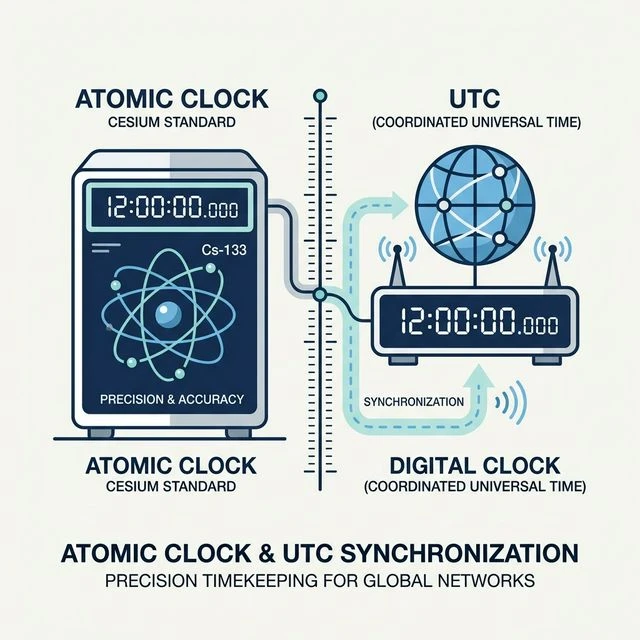
UTC is based on International Atomic Time (TAI), which is calculated using over 400 highly precise atomic clocks located in national laboratories around the world. These clocks ensure that time remains globally consistent within nanoseconds. For real-time coordination, check our Time Zone Converter.
Why UTC Matters in the Modern World
UTC plays a critical role in numerous aspects of contemporary life, often working invisibly behind the scenes:
Aviation and Air Traffic Control Synchronization
All flight schedules, flight plans, and air traffic control communications worldwide use UTC, which pilots and aviation professionals call 'Zulu time.' This eliminates any confusion about time zones when coordinating flights across the globe. You can learn more about Zulu time vs GMT here.
Internet and Computing Systems
Servers and computers synchronize their internal clocks using UTC via the Network Time Protocol (NTP). This ensures that timestamps on emails, financial transactions, database entries, and log files are consistent regardless of where the systems are located. Most programming languages and databases store time internally as UTC.
Financial Markets and Global Trading
Stock exchanges and financial institutions record all transactions in UTC for accurate record-keeping and regulatory compliance. This is crucial for high-frequency trading, where transactions occur in milliseconds and accurate timestamps are legally required. For example, New York stock market hours are strictly coordinated relative to UTC offsets.
Weather Services and Meteorology Coordination
Meteorological data worldwide is recorded and reported in UTC, allowing weather services in different countries to coordinate observations and forecasts. Weather maps and satellite imagery timestamps always refer to UTC.
UTC vs GMT: Understanding the Key Differences
While UTC and GMT are often used interchangeably in everyday conversation, they are technically different concepts:
| Aspect | GMT | UTC |
|---|---|---|
| Definition | Mean solar time at Greenwich Observatory | Atomic time standard with leap second adjustments |
| Basis | Earth's rotation relative to the Sun | Cesium atom vibrations in atomic clocks |
| Precision | Variable (about 1 second per year) | Extremely precise (1 second per 100 million years) |
| Type | Time zone (used by UK in winter) | Time standard (reference for all time zones) |
| DST Changes | UK switches to BST in summer | Never changes; always constant |
How Time Zones Relate to UTC
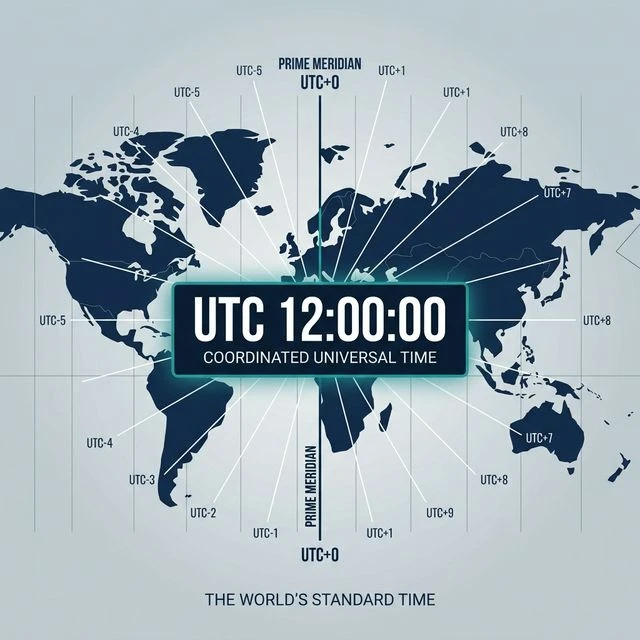
Every time zone in the world is defined as an offset from UTC. This makes UTC the universal reference point for understanding time anywhere on Earth:
- New York (Eastern Time): UTC-5 in winter (EST), UTC-4 in summer (EDT)
- London: UTC+0 in winter (GMT), UTC+1 in summer (BST)
- Paris and Berlin: UTC+1 in winter (CET), UTC+2 in summer (CEST)
- Dubai: UTC+4 (no daylight saving time)
- Mumbai: UTC+5:30 (no daylight saving time)
- Tokyo: UTC+9 (no daylight saving time)
- Sydney: UTC+10 in winter (AEST), UTC+11 in summer (AEDT)
Explore more about how many time zones there are in our latest exploration.
Practical Tips for Using UTC in Daily Life
- Convert to UTC first: When scheduling across multiple time zones, convert all times to UTC first, then back to local times
- Use our timezone converter: Visit our timezone converter for quick and accurate conversions
- Set a world clock: Keep UTC visible alongside your local time on your phone or computer
- Specify timezone in communications: Always include the timezone when scheduling international meetings
- Consider UTC for team coordination: Some global teams standardize on UTC for all internal communications
Conclusion: Why Understanding UTC Matters
UTC is far more than just a technical time standard—it's the invisible backbone of global timekeeping that keeps our interconnected world synchronized. By understanding how UTC works and how it relates to your local time zone, you can communicate more effectively across borders, avoid scheduling confusion, and appreciate the remarkable precision of modern timekeeping. Use WhaTime.iST to check current times in any city and always stay synchronized with the world.